


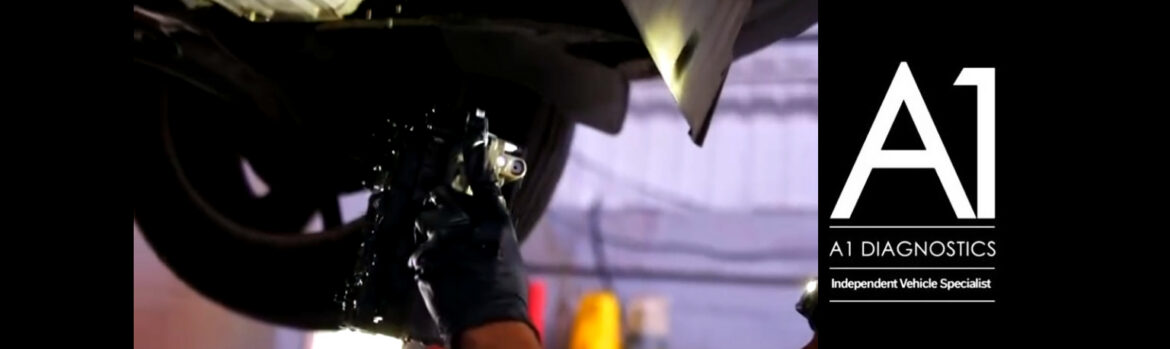
A Direct-Shift Gearbox, commonly known as a DSG gearbox, combines the convenience of an automatic transmission with the fast and efficient gear changes of a manual gearbox. Although DSG technology can deliver excellent performance, it is a technically complex system that requires the correct servicing procedures, specialist diagnostic equipment and experienced technicians.
At A1 Diagnostics in Cardiff, we have over 20 years of experience within the automotive repair industry. We provide professional DSG gearbox servicing, diagnostics and repairs for customers throughout Cardiff and South Wales.
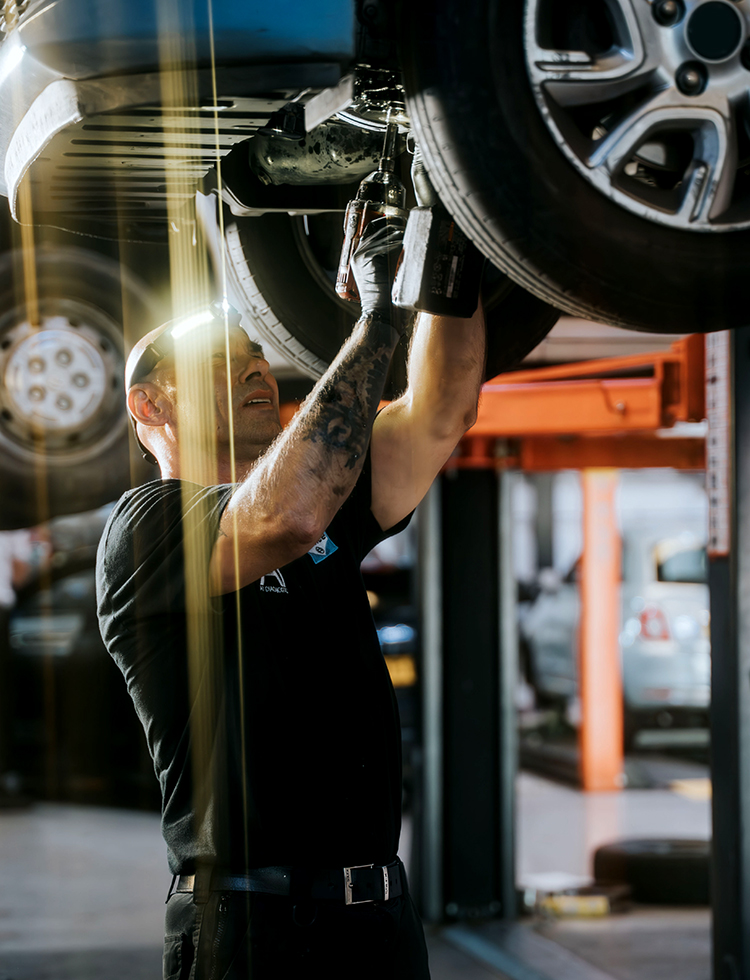
As an award-winning independent garage with advanced diagnostic facilities and 11 vehicle ramps, we can investigate DSG gearbox problems efficiently and recommend the appropriate maintenance or repair. Check out the video below demonstrating our DSG gearbox servicing capabilities:
What Is a DSG Gearbox?
DSG stands for Direct-Shift Gearbox. It is an electronically controlled dual-clutch transmission originally developed for use across vehicles belonging to the Volkswagen Group.
Unlike a traditional automatic gearbox that commonly uses a torque converter, a DSG transmission contains two separate clutches. One clutch normally controls the odd-numbered gears, while the other controls the even-numbered gears. In a seven-speed transmission, for example:
• One clutch operates first, third, fifth and seventh gears.
• The second clutch operates second, fourth, sixth and reverse.
While one gear is delivering power, the gearbox can preselect the next expected gear. When a gear change is required, one clutch disengages as the other engages. This arrangement allows rapid gear changes with very little interruption to the delivery of power.
Audi describes its S tronic system as using two multi-plate clutches, with one controlling the odd gears and the other controlling the even gears. This illustrates the fundamental operating principle behind Volkswagen Group dual-clutch transmissions. Audi UK
Which Vehicle Brands Use DSG Gearboxes?
DSG transmissions are mainly associated with the Volkswagen Group. However, the transmission may be marketed under a different name depending on the vehicle manufacturer.
A1 Diagnostics can provide DSG and dual-clutch transmission services for vehicles produced by the following Volkswagen Group brands:
• Volkswagen
• Volkswagen Commercial Vehicles
• Audi, where the system is generally called S tronic
• Škoda
• SEAT
• CUPRA
We are experts at repairing and servicing DSG gearboxes a part of the Volkswagen Group.
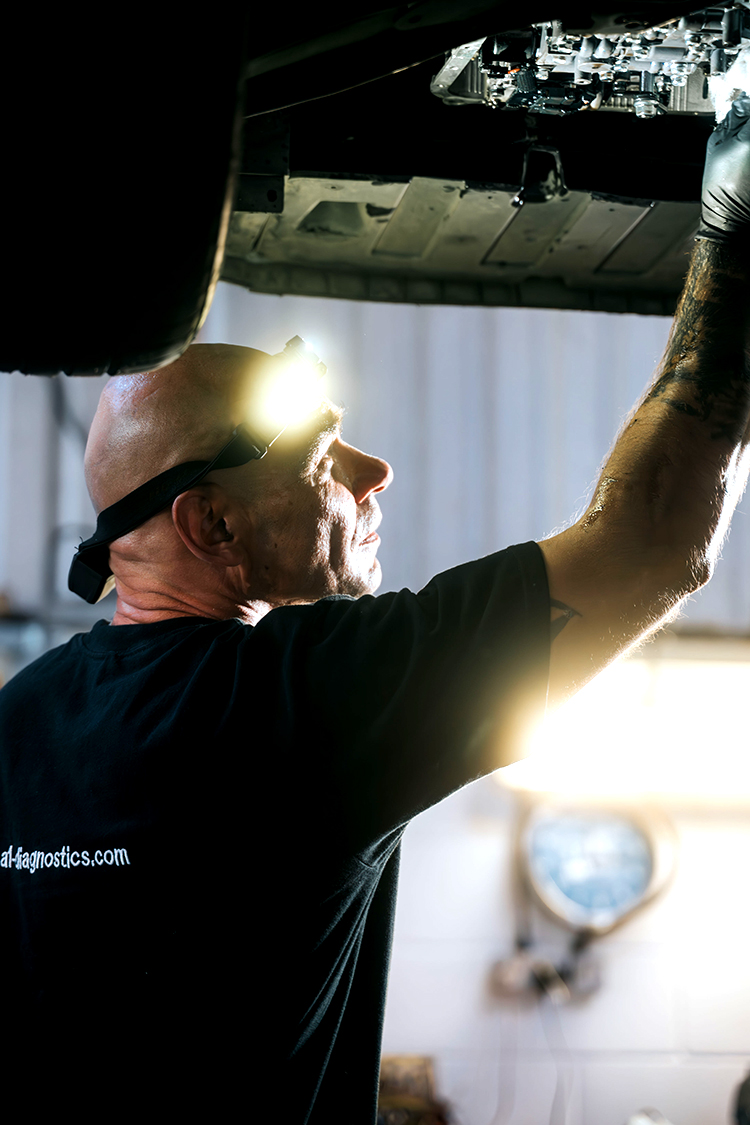
DSG or related Volkswagen Group dual-clutch transmissions have been installed in numerous models, including the Volkswagen Golf, Polo, Passat, Tiguan, Touran, T-Roc, T-Cross, Caddy and Transporter. They can also be found in models such as the Audi A1, A3, A4, A5, A6, Q2, Q3 and Q5; the Škoda Fabia, Octavia, Superb, Karoq and Kodiaq; and the SEAT or CUPRA Ibiza, Leon, Ateca, Formentor and Tarraco.
This is not an exhaustive model list, and not every engine or model variant uses a DSG transmission. The gearbox fitted depends on factors such as the vehicle’s age, engine, torque output, drivetrain and original specification.
Other manufacturers also use dual-clutch transmissions, but these are not always technically DSG units. Examples include Ford PowerShift, Renault EDC, Hyundai and Kia DCT, Mercedes-Benz 7G-DCT and 8G-DCT, BMW DCT and Porsche PDK. Although the basic dual-clutch principle may be similar, the internal design, lubricants, diagnostic procedures and servicing requirements can be very different. Correct gearbox identification is therefore essential before any work begins.
Understanding Different DSG Gearbox Types
The term “DSG” does not refer to one universal gearbox. Volkswagen Group vehicles have used several DSG designs, each with different torque capacities, clutch systems, servicing requirements and control strategies. Common DSG transmission families include:
DQ200 Seven-Speed DSG
The DQ200 is a transverse seven-speed DSG commonly used with smaller petrol and diesel engines. It generally uses a dry dual-clutch assembly. Because the clutches are not immersed in gearbox oil, its construction and maintenance requirements differ from wet-clutch DSG units.
DQ250 Six-Speed DSG
The DQ250 is a six-speed wet-clutch transmission widely installed across Volkswagen, Audi, Škoda and SEAT vehicles. Its clutch packs operate in oil, helping the transmission manage higher torque and dissipate heat.
Correct oil and filter maintenance is particularly important because the fluid assists with lubrication, hydraulic operation and temperature control.
DQ381 Seven-Speed DSG
The DQ381 is a later-generation seven-speed wet-clutch DSG used in many modern Volkswagen Group vehicles. It has been designed to provide improved efficiency while accommodating higher levels of engine torque.
DQ500 Seven-Speed DSG
The DQ500 is a robust wet-clutch DSG designed for higher torque applications. It can be found in performance cars, SUVs and certain Volkswagen commercial vehicles.
DL382 and DL501 S tronic Gearboxes
Audi vehicles with longitudinally mounted engines may use gearbox designs such as the DL382 or DL501. Audi generally markets these dual-clutch units as S tronic rather than DSG. Their construction and servicing procedures differ from the transverse DQ gearbox family.
This variety is why a DSG service should never be approached as a generic automatic gearbox oil change. The transmission must first be identified so that the correct oil specification, filter, fill procedure, fluid level and service routine can be followed.
Why DSG Gearbox Servicing Is Important
A DSG transmission depends on close coordination between its mechanical, hydraulic and electronic components. In wet-clutch gearboxes, the transmission fluid must lubricate moving parts, assist hydraulic operation and help control heat.
Over time, the fluid can deteriorate and become contaminated with microscopic material produced by normal internal wear. If servicing is neglected, this can affect lubrication, hydraulic pressure and the operation of the clutch packs and mechatronic system.
Depending on the gearbox specification, a professional DSG service may involve:
• Identifying the exact gearbox type and transmission code.
• Scanning the transmission control module for stored fault codes.
• Checking live data and gearbox operating values.
• Draining the transmission fluid correctly.
• Replacing the DSG oil filter where applicable.
• Refilling the gearbox with the correct specification and quantity of fluid.
• Monitoring transmission temperature during the level-setting procedure.
• Inspecting the drained fluid for evidence of abnormal contamination.
• Checking for external leaks.
• Carrying out basic settings or adaptation procedures when required.
• Road testing the vehicle and checking gear-selection quality.
Service intervals are not identical across every DSG transmission. Wet-clutch and dry-clutch units have different requirements, while intervals can also vary according to gearbox code, vehicle model and manufacturer instructions. A1 Diagnostics can identify the installed gearbox and check the appropriate servicing requirements rather than relying on a single interval for every vehicle.
The Importance of the DSG Mechatronic Unit
The mechatronic unit is one of the most important components inside a DSG transmission. It combines electronic control with hydraulic operation and uses information from numerous vehicle systems to control clutch engagement, gear selection and hydraulic pressure.
The transmission control system considers information such as:
• Engine speed
• Road speed
• Accelerator position
• Brake-pedal input
• Selected driving mode
• Gearbox temperature
• Clutch position
• Hydraulic pressure
• Input and output shaft speeds
A problem with the mechatronic unit can produce symptoms that resemble mechanical gearbox failure. This is why accurate diagnosis must take place before expensive parts are replaced.
A transmission fault can be caused by the mechatronic unit, worn clutches, a pressure problem, contaminated fluid, an electrical fault, a sensor issue, damaged wiring, low system voltage or internal mechanical wear. Reading a fault code is only the beginning of the diagnostic process. The code must be interpreted alongside live information, physical symptoms and the vehicle’s repair history.
Drivers should arrange an inspection if they experience any of the following:
• Juddering when moving away.
• Harsh or delayed gear changes.
• A delay when selecting drive or reverse.
• Loss of drive.
• Intermittent failure to select a gear.
• Gearbox warning messages.
• A flashing gear-position indicator.
• The transmission entering emergency or limp mode.
• Unusual noises from the gearbox.
• Clutch slipping under acceleration.
• Engine speed increasing without a corresponding increase in road speed.
• Hesitation during low-speed manoeuvres.
• Oil leaking from the transmission.
• Overheating warnings.
These symptoms do not automatically mean the entire gearbox needs replacing. Proper diagnostics can help establish whether the problem concerns servicing, clutch adaptation, a sensor, the mechatronic system, hydraulic pressure or internal mechanical damage.
A1 Diagnostics has over two decades of experience in vehicle servicing, diagnostics and repairs. Our technicians understand that DSG problems require a methodical combination of electronic testing and mechanical knowledge.
A modern DSG gearbox communicates with several other control units, including the engine management, ABS and stability-control systems. We use advanced diagnostic equipment to interrogate these systems, retrieve fault information and examine relevant operating data.
We do not assume that every gearbox warning means the complete transmission has failed. Our diagnostic process is designed to identify the actual cause of the problem so that customers can make an informed decision about the required work.
A1 Diagnostics can help with routine DSG servicing as well as investigating gearbox faults. Depending on the transmission and the condition found, our work can include fluid and filter maintenance, electronic diagnosis, mechatronic investigation, clutch-related work and gearbox repair or replacement.
Our Cardiff garage has 11 vehicle ramps, enabling us to manage servicing and repair work efficiently. Customers can access specialist DSG knowledge without necessarily having to rely on a main dealership.
A1 Diagnostics is an award-winning independent garage with a strong background in advanced vehicle diagnostics and electronic repairs.
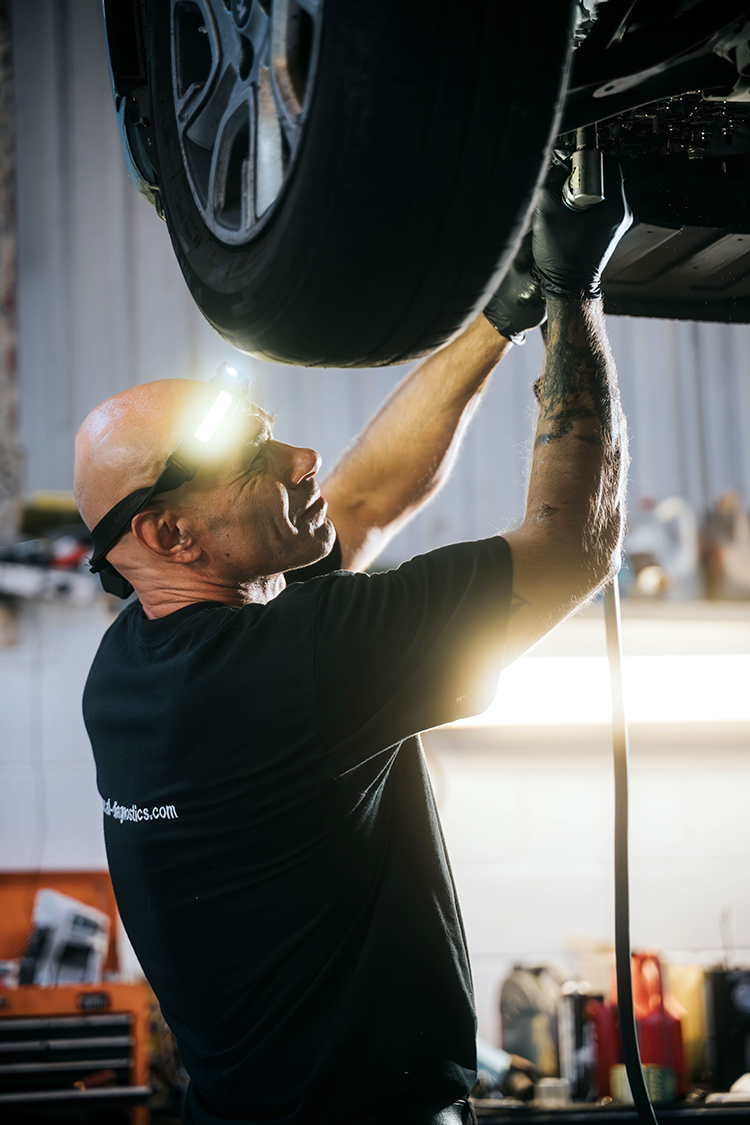
Our investment in equipment, training and technical knowledge enables us to work on increasingly sophisticated vehicle systems.
Choosing an independent garage does not mean compromising on technical capability. A properly equipped independent specialist can provide detailed diagnostics, appropriate servicing and informed repairs while offering a personal and straightforward service.
Whether your Volkswagen Golf is due for DSG maintenance, your Audi is experiencing an S tronic warning, or your Škoda, SEAT or CUPRA has started changing gear incorrectly, A1 Diagnostics can investigate the problem and explain the available options.
Regular maintenance can help protect the transmission, while early diagnosis of warning signs may prevent a developing fault from causing more extensive damage.
If your DSG gearbox is due for servicing or your vehicle is displaying transmission-related symptoms, contact A1 Diagnostics to arrange an inspection.
A1 Diagnostics provides DSG gearbox servicing and repairs for Volkswagen, Audi, Škoda, SEAT, CUPRA and Volkswagen commercial vehicles throughout Cardiff and South Wales. A1 Diagnostics DSG services
A1-Diagnostics and ECU Repairs
64 Sloper Road
Leckwith,
Cardiff
CF11 8AB
Tel: 02920 220 380
Opening Times
Mon – Fri: 8:00am – 6:00pm
Email: info@a1-diagnostics.com