


Did you know that between 28% and 32% of UK drivers name their cars? Vans and cars are an essential element of modern life, and for many of us they are old friends that get us ‘from A to B’ in our busy lives. So what do you do when your old friend needs more than a little touch up to keep it on the road? Replacement engines can be an affordable option for anyone wanting to keep their existing car on the road, rather than paying out for a new upgraded model.
Replacing an engine is a cost-effective choice for many. It involves the complete removal of the old parts from a vehicle and replacing with either a reconditioned or a brand new engine.
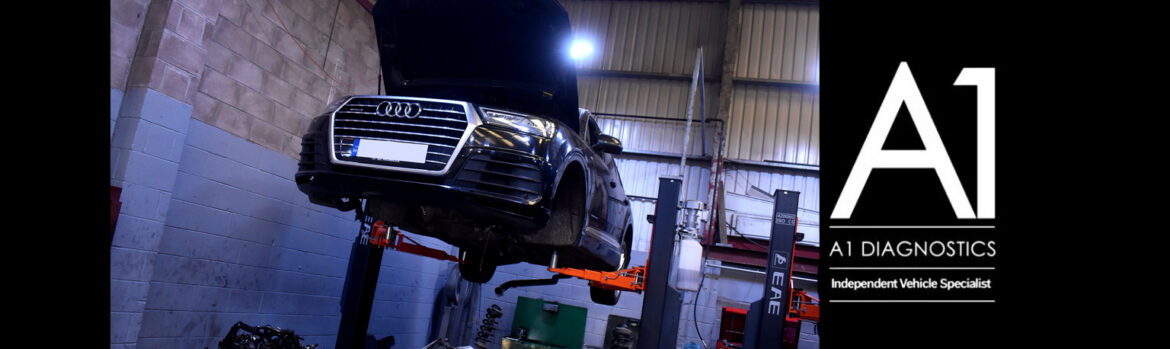
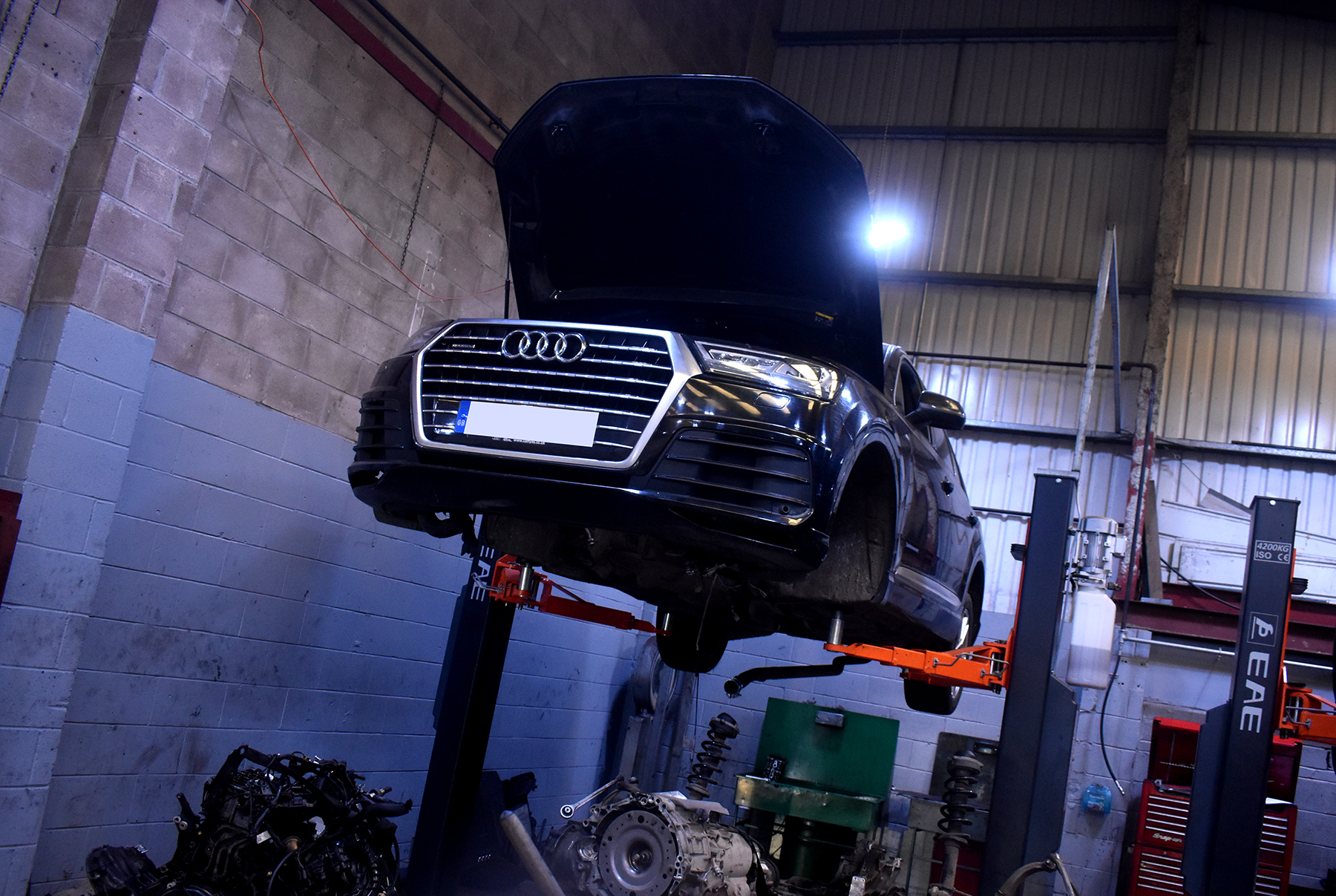
The first part of the process is to check a vehicle actually needs a replacement engine! For an Audi recently brought into our garage in Cardiff, this was the first step in our diagnostics process. Here is the Audi vehicle up on the ramp.
We checked the cause of the engine failure, exploring whether there were any other elements that could have failed and whether there were alternative repair options. Issues with oil consumption, timing chains, fluids and pressures were all explored before the final verdict of engine failure was given.
Once this was decided, the process for removing and replacing the engine could begin. Our highly-trained mechanics began by removing the front portions of the car, including the front bumper, the headlights, and the crash bar. The engine bay was now accessible, and the next steps involved disconnection of all the parts of the car that fed from or into the engine itself. Wiring and fuel lines were all separated from the car’s core, along with the exhaust downpipe and the transmission mounts. Any parts of the car that were in good condition were left in situ, with the focus being solely on the engine itself.
Once the ties to the rest of the car were removed, the engine could be hoisted out of the car’s body and a replacement lowered in. All the attachments, fuel lines, transmission and other leads into the engine had to be restored, followed by careful checks to ensure all connections were secure. Any worn parts such as engine mounts, hoses or gaskets can be replaced at this point, too. The fluids are then reintroduced to the vehicle, including oil and coolants which were bled during the engine removal stage.
After the mechanical installation and physical checks, the engine’s immobiliser and ECU have to be coded and paired with the car itself, otherwise it won’t start successfully! Our mechanics are able to perform this operation and trouble-shoot any issues arising from the new component’s introduction.
Finally a test drive and full set of diagnostics are performed to check that the new engine is performing at optimum levels and all parts of the car’s systems are functioning correctly. In the case of our Audi, the replacement was 100% successful and the car is now back in the family fold!
If you would like to explore options for extending the life of your vehicle with a replacement engine, please get in touch with our team at A1 Diagnostics who would be happy to help.
A1-Diagnostics and ECU Repairs
64 Sloper Road
Leckwith,
Cardiff
CF11 8AB
Tel: 02920 220 380
Opening Times
Mon – Fri: 8:00am – 6:00pm
Email: info@a1-diagnostics.com