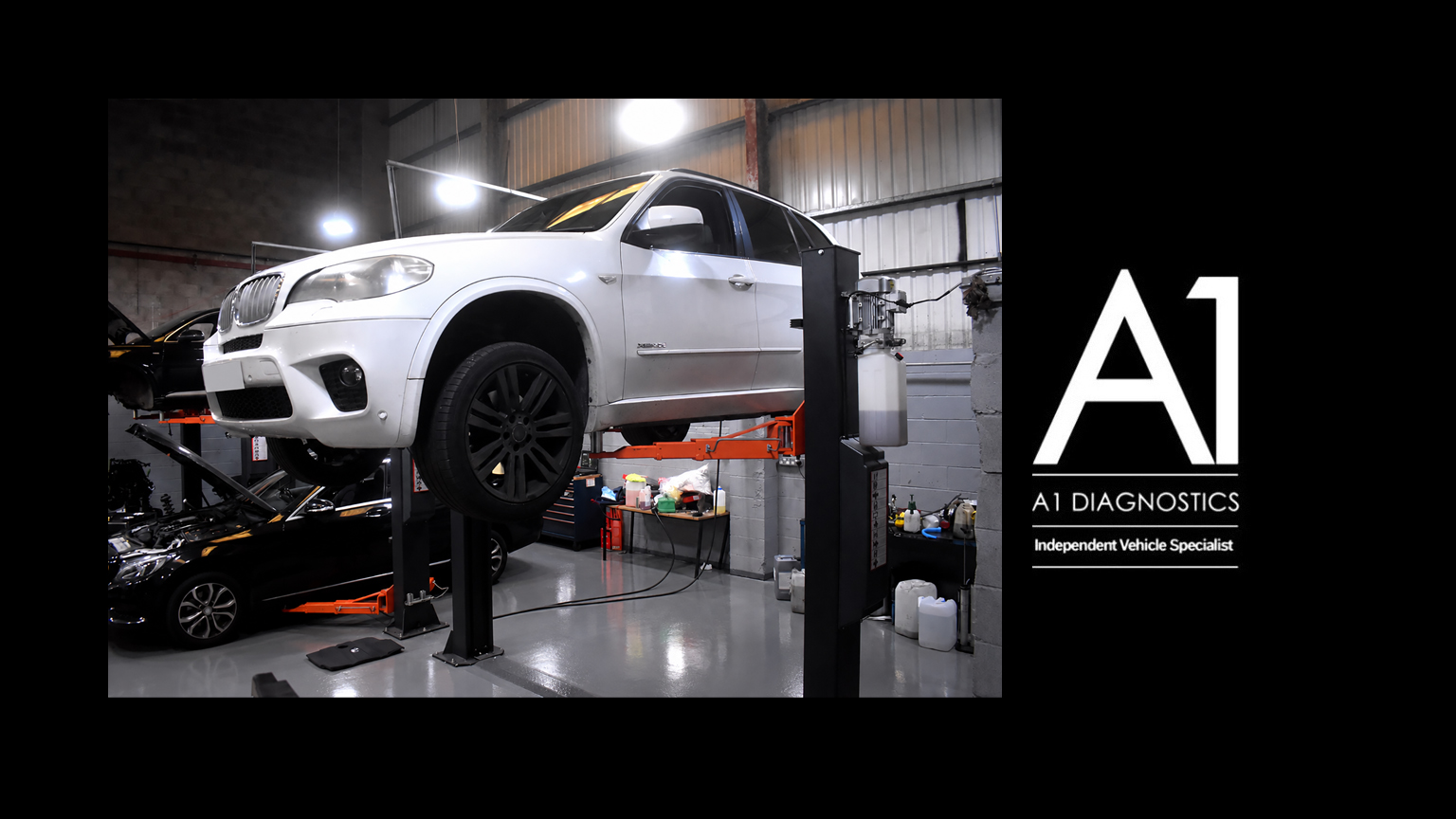
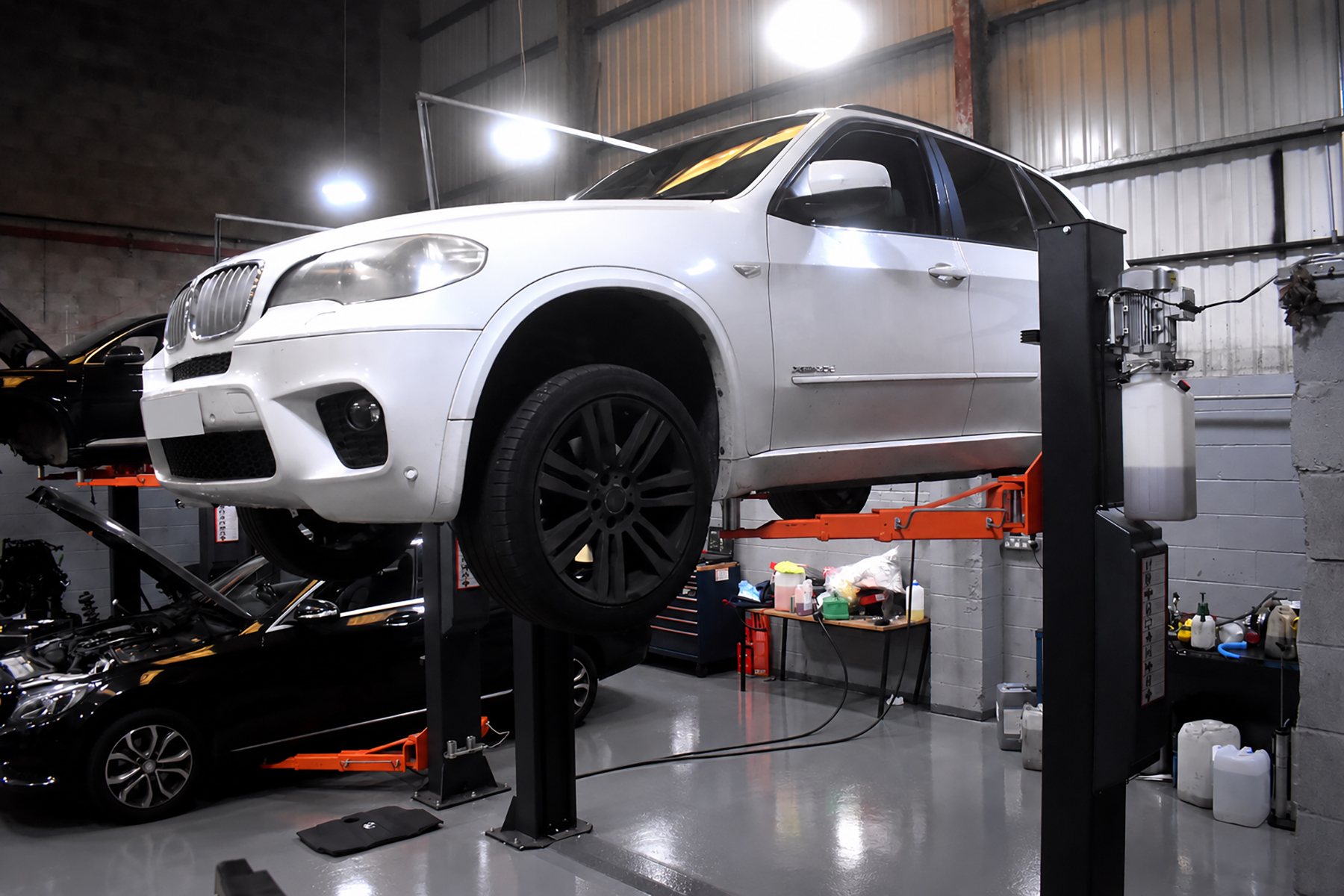
BMWs are one of the most famous car brands out there, and at A1 Diagnostics we’re specialists in their care and maintenance. We recently had a Beemer X5 brought into the garage for a differential and transfer box service. Sounds like something you’d hear on Match of the Day, right? Here is the vehicle pictured on a ramp here at the garage.
Well, this is a key area of maintenance which can get overlooked if you’re not careful. Read on for more details…
Both differentials and the transfer box run on fluids, which are often marketed as ‘lifetime’ quality. However, we’ve seen over many years and many cars that this isn’t quite the case. The fluids that fill these systems get old, breaking down and ageing in a way that can damage the components they serve.
It is recommended that these fluids be serviced – and ideally replaced – every 60,000 miles, or 40,000 – 50,000 miles if you regularly tow trailers, etc. This ensures that the all-wheel drive system operates at optimum performance and prevents damage to components that are much more expensive, like the transfer case itself.
Need help with vehicle Servicing?
Our Cardiff workshop diagnoses the fault and gives you a fixed quote before any work starts.
So what does a service look like for these areas? Starting with the transfer box, our skilled mechanics drain the older fluids and make sure the system is ready for a new and improved, specialised fluid replacement. This will be an OE-specified fluid that meets required standards. After the fluid has been replaced, we run a diagnostics scan and put the transfer box into service mode so we can record the changes and reset the oil wear and adaptation values in the VTG control module.
To service the differentials for both front and rear of the vehicle, we again begin by extracting the older gear oil and clearing through the system. The new gear oil is selected to suit the car’s specifications and refilled into the differentials at front and rear. After this, our trained mechanics carry out an inspection of the drain plugs and seals, replacing any that are worn or leaking.
These steps are messy but straightforward, and by doing this regularly vehicle owners can mitigate the risks of a more costly repair down the line.
If you would like to discuss these services or have any questions about our maintenance work, please get in touch today!